

There’s an old saying that goes, “A stitch in time saves nine.” It’s a timeless piece of advice about tackling small problems before they become big ones. But when your garage door suddenly slams shut, goes off its track, or refuses to open when you’re already late, the situation feels far more urgent than a single loose stitch.
It’s an emergency. Your car might be trapped inside, your home’s security is compromised, and the largest moving object in your house has just become a massive, unpredictable hazard.
In these high-stress moments, it’s natural to want to fix the problem immediately. But while some issues are simple DIY tasks, others require the steady hand of an expert. This guide will help you with on-the-spot garage door troubleshooting so you can safely assess the situation and decide whether to grab your toolbox or your phone.
The First Five Minutes: Your Emergency Action Plan
Before you do anything else, the priority is safety. A malfunctioning garage door can be incredibly dangerous.
- Stop Everything: Do not touch the wall button or remote again. Trying to force the door to move can cause more damage.
- Clear the Area: Get pets, children, and your vehicle out of the garage door’s path immediately.
- Look and Listen: Can you see a snapped cable? Is the door hanging crooked? Did you hear a loud bang that sounded like a firecracker? These are all critical clues.
- Disconnect Power: If it’s safe to do so, unplug the garage door opener from the ceiling outlet. This prevents anyone from accidentally activating it while you’re inspecting things.
Did You Know?
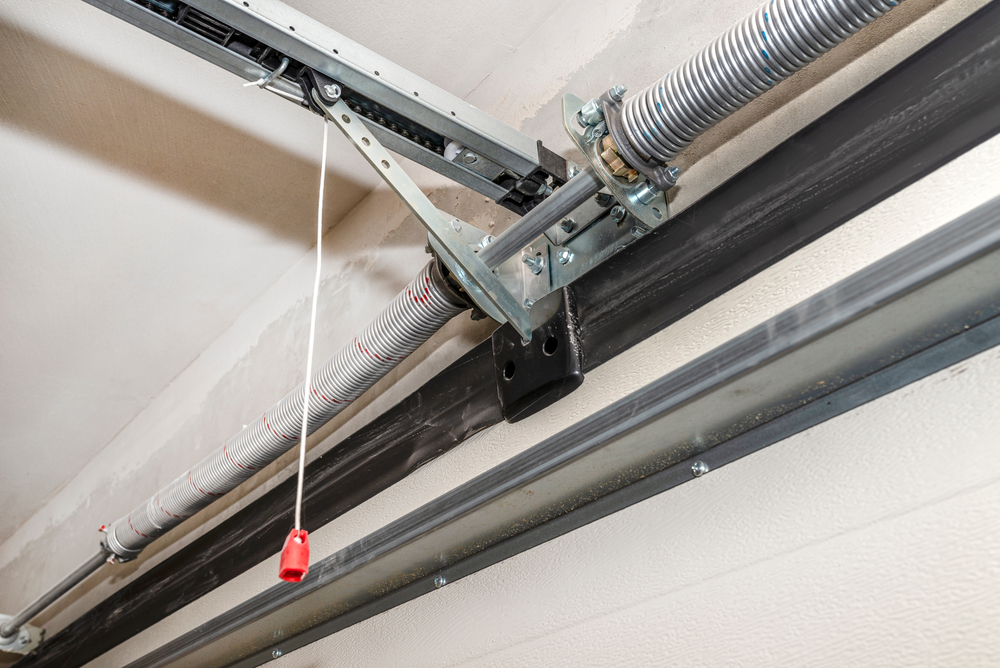
That loud “bang” many homeowners hear is almost always a torsion spring snapping. These springs are under immense tension and store enough mechanical energy to lift a 300-pound door. A failure is not just loud; it’s a release of powerful force.
What You Can Handle: The DIY Triage List
Some of the most common calls for emergency garage door repair can be resolved with a few simple checks. If your door isn’t physically damaged or hanging at an odd angle, you may be able to handle these yourself.
Issue 1: The Door Won’t Close or Reverses Instantly
This is the most frequent issue and is almost always related to the safety sensors.
- The Fix: Look at the two small “eyes” at the bottom of your door tracks. Each should have a steady, solid light (usually green or red). If one is blinking or off, something is wrong. Wipe the lenses with a soft cloth and check for anything blocking their path—a stray leaf, a spiderweb, or a trash can. Gently adjust them until both lights are solid.
Issue 2: The Remote Doesn’t Work, but the Wall Button Does
Before you panic about a broken opener, check the simplest solution.
- The Fix: This is a power or signal issue. Replace the batteries in your remote control. If that doesn’t work, check the “Lock” or “Vacation” mode on your wall control panel. If a light is flashing, press and hold the lock button for a few seconds to deactivate it.
Pro Tip
Keep a spare set of remote batteries taped to the inside of your wall control panel. When an emergency strikes, you won’t have to rummage through junk drawers to find them.
Issue 3: The Opener Has No Power at All
You press the button, and nothing happens—no lights, no sound, nothing.
- The Fix: Your opener is likely plugged into a GFCI outlet. Look for other outlets in the garage that have stopped working. Find the GFCI outlet (it has “Test” and “Reset” buttons) and press “Reset.” You should hear a click as power is restored. Also, check your home’s circuit breaker.
When to Call a Pro Immediately: The “Do Not Touch” List
While the DIY spirit is admirable, some situations are too dangerous for anyone but a trained professional. Attempting these repairs without the right tools and knowledge can lead to severe injury or thousands of dollars in further damage.
Red Flag 1: A Snapped or Fraying Cable
You’ll see a metal rope hanging loose or notice one has come off its drum at the top of the door. These cables are what lift the full weight of the door.
- Why Call a Pro: The cables work in tandem with the spring system. If one has snapped, the other is likely under immense, uneven tension. Trying to move the door or reattach the cable can cause the door to fall or the spring to snap violently.
Red Flag 2: A Crooked or Off-Track Door
The door is visibly slanted in the opening, or one or more of the rollers have popped out of the tracks.
- Why Call a Pro: An off-track door is unstable and can fall completely without warning. It takes specialized tools and knowledge of weight distribution to safely get the door back into its tracks and rebalance it without damaging the panels.
Little Known Fact
Many garage door accidents happen when people try to “help” a crooked door back into its track. Pushing on a bent panel or trying to force a roller back in can cause the entire section to collapse.
Red Flag 3: A Broken Spring
You heard that loud “bang,” and now you can see a visible 2-inch gap in one of the large springs above your door.
- Why Call a Pro: This is the most dangerous repair for a homeowner to attempt. Torsion springs must be wound with special tools called winding bars. Using a screwdriver or any other substitute is a recipe for disaster, as the tool can be thrown with incredible force if it slips.
The Leader in North Georgia Emergency Repairs: Extreme Garage Doors
In an emergency, you need speed, but you also need expertise. At Extreme Garage Doors, we built our reputation on being the reliable choice for North Georgia garage doors, especially when things go wrong unexpectedly. Our team is trained to handle high-stakes situations safely and efficiently.
We understand that an emergency is stressful. That’s why we prioritize clear communication and rapid response. When you call us, you’re not just getting a repair; you’re getting peace of mind from a top-rated best garage door service provider who can turn a crisis into a solution.
Pro Tip
If your door is stuck open and you’re waiting for a technician, you can secure it temporarily. Once the opener is disconnected, lower the door manually. Then, place a C-clamp on the track just above one of the bottom rollers. This will prevent anyone from forcing the door open from the outside.
Conclusion
Knowing the difference between a minor hiccup and a major hazard is key to handling a garage door emergency. Simple sensor adjustments and battery changes are well within your control. But when you’re dealing with the core lifting mechanisms—the springs and cables—it’s time to step back and call for professional help. Don’t risk your safety to save a few dollars.
Frequently Asked Questions
Q: Where can I find the best emergency garage door repair service that offers same-day appointments?
A: The best emergency garage door repair companies will explicitly mention 24/7 or emergency services on their website and have a dedicated phone line for urgent calls. Look for local companies with a high volume of positive reviews that mention fast response times. A company like Extreme Garage Doors is equipped to handle same-day calls for critical issues like broken springs or off-track doors.
Q: My door is stuck halfway. Can I pull the red emergency release cord?
A: You can, but only if you are certain the spring is not broken. The red cord disconnects the door from the opener, making it manual. If the spring is intact, the door should be relatively easy to move. However, if the spring is broken, pulling that cord will release the opener’s hold, and the full weight of the door will come crashing down. If you hear a loud bang, do not touch the release cord.